


Driving from Germany to Kosovo: The Complete Summer Road Guide
Driving from Germany to Kosovo takes 18 to 22 hours of pure driving over roughly 1,700 to 2,000 kilometers, usually via Austria, Slovenia or Hungary, Croatia and Serbia to the Merdare crossing. You need vignettes for Austria, Slovenia and Hungary, pay-per-use tolls in Croatia and Serbia, and a data plan for the non-EU stretch, since EU roaming stops at the Croatian border and Kosovo needs its own eSIM.
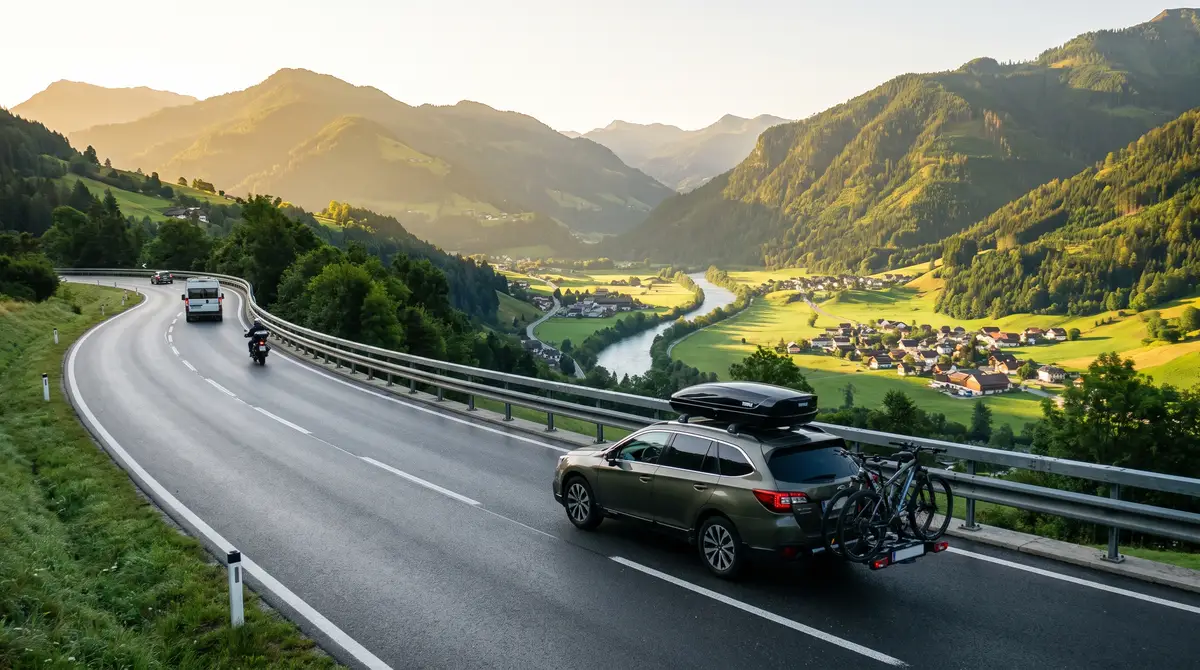
Every July and August, a convoy that nobody organizes forms on the autobahns of southern Germany: roof boxes, three generations in one car, plates from Stuttgart, Munich, Zurich and Vienna, all pointed south-east. The road to Kosovo is a family ritual, and also a small logistics exam: four or five countries, three vignettes, two toll systems, a border that tests your patience and a phone that stops working halfway. Here is the whole thing in one place, written by people who have done the drive more times than they care to count.
The two classic routes
The central route runs Munich, Salzburg, the Tauern motorway through Austria, Slovenia past Ljubljana, Croatia past Zagreb, then Serbia via Belgrade and Niš to the Merdare crossing into Kosovo. From Stuttgart or Frankfurt it is about 1,800 kilometers, from Zurich a little less. The eastern route swaps Slovenia and Croatia for Hungary: Vienna, Budapest, Szeged, the Horgoš crossing into Serbia, then the same Belgrade to Niš to Merdare run. It is flatter and often faster in good traffic, but the Horgoš border can queue for hours in peak season.
The southern alternative: Croatia, Montenegro, Albania
Families with time to spare split the trip at the sea: Croatia's coastal motorway, a night in Dubrovnik or Ulcinj, then Montenegro or Albania and into Kosovo through the western crossings. It adds hours but turns the drive into a holiday. And if you come from Italy, the Bari or Ancona ferries land you in Durrës, from where the motorway to Prishtina is a comfortable few hours with no extra borders beyond the Albanian one.
Vignettes and tolls, country by country
- Austria: a digital vignette bought online before you enter, with short-term options that cover a single transit; the Tauern route also has separately paid tunnel sections.
- Slovenia: an electronic vignette tied to your plate, bought online in a minute; the short-term version is enough for a transit.
- Hungary: the e-vignette, also plate-based and sold online, is the one people forget most often; cameras enforce it.
- Croatia and Serbia: no vignette, you pay per stretch at toll plazas, by card or cash. Keep some euros handy for the Serbian booths.
- Kosovo: the motorways are free. Check with your insurer that your green card covers Kosovo; if it does not, border insurance is sold at the crossing.
Borders: timing beats everything
Merdare and Horgoš are where summer plans go to wait. The practical rules: cross at night or before dawn, avoid the weekend peaks at the start of the German school holidays, and keep documents in one folder on the passenger seat: passports or IDs for everyone, the vehicle registration, the insurance card, and a power of attorney if the car is not in the driver's name. Small bottles of water and a charged tablet for the kids have saved more family moods than any shortcut.
One eSIM for every country on the way
See the plansThe phone problem nobody explains at the border
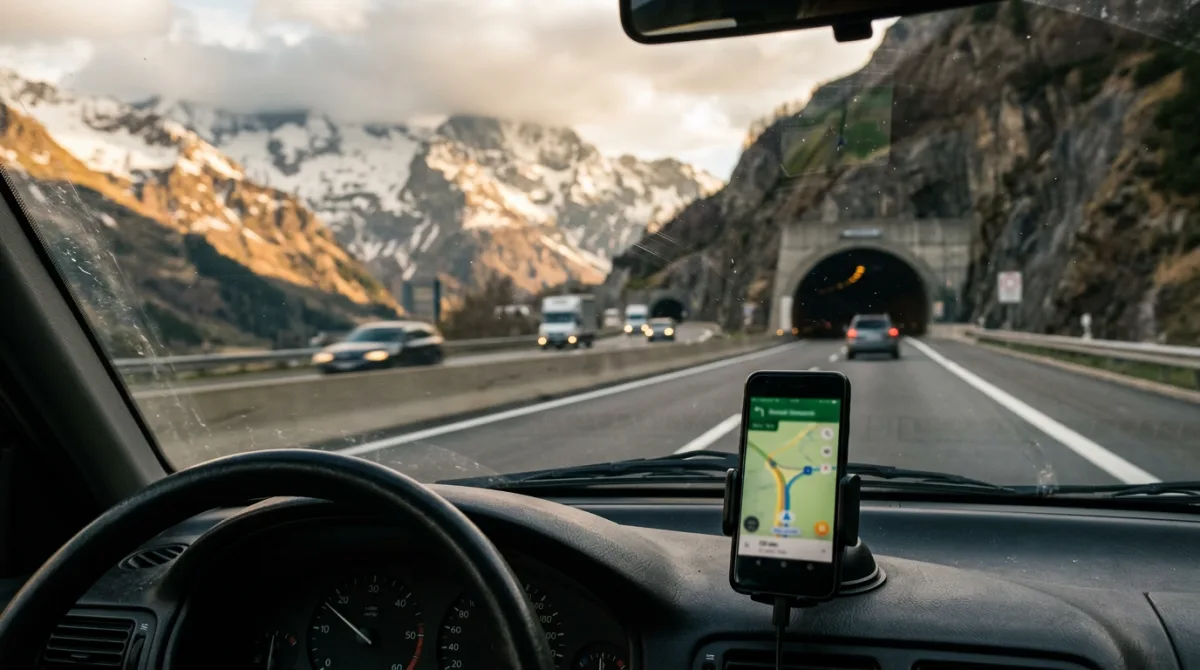
Your German or Austrian SIM roams like at home through Austria, Slovenia, Hungary and Croatia. Then you enter Serbia and the meter starts: Serbia, Bosnia, Montenegro, North Macedonia and Albania sit outside EU roaming, and Kosovo is outside both EU roaming and most regional travel plans. Swiss SIMs are worse off, since Switzerland itself is outside the EU zone, so the clock starts at the German border. That is why the map app freezes exactly when you need it on the Serbian motorway, and why the WhatsApp group of the convoy goes silent after Belgrade.
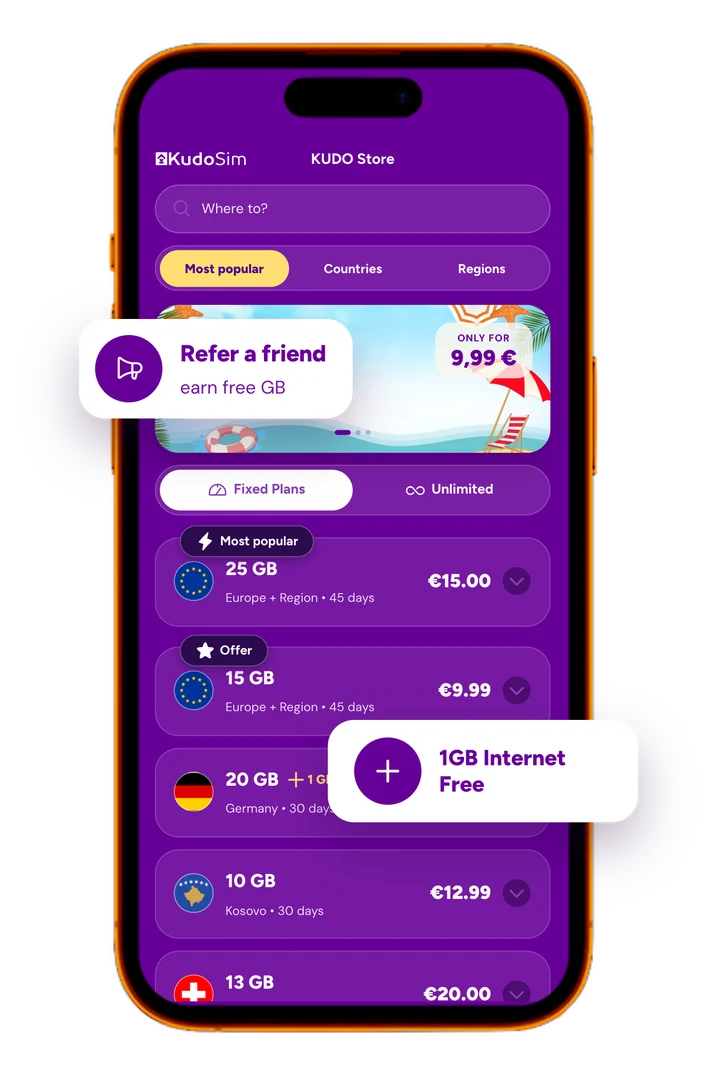
- The Europe + Region eSIM covers 46 countries, including every country on these routes except Kosovo, from EUR 1.20; 15 GB costs EUR 9.99 and unlimited plans start at EUR 8.50 for 3 days.
- Kosovo needs its own plan: 13 GB for 27 days at EUR 20, or the Kudo World plan with 20 GB for 30 days at EUR 26.99 that works in Kosovo plus 149 more countries.
- Install both at home over Wi-Fi before you leave; validity starts when the eSIM first connects abroad, not when you buy.
- Your home SIM stays in the phone for calls and WhatsApp, so nobody needs your new number.
- Fixed-GB plans allow hotspot, so one eSIM can feed the kids' tablets in the back seat.
Kosovo eSIM for the weeks at home
See the plansA sane schedule for the drive
Most families do it in two days with a stop around Zagreb, Belgrade or the Croatian coast, and the ones who arrive relaxed leave at 4 a.m. on day one. Fuel is cheaper in Serbia and Kosovo than in Austria and Slovenia, so fill up late. Download offline maps for the whole route as a backup, set the vignettes up a week ahead, and plan the last border for the small hours. The reward is the same every year: the first macchiato in Prishtina, tasting of the fact that you made it.
Frequently asked questions
How long does it take to drive from Germany to Kosovo?
Around 18 to 22 hours of driving for 1,700 to 2,000 kilometers depending on the start point, plus border waits. Most families split it into two days with an overnight stop near Zagreb, Belgrade or on the Croatian coast, and start very early to beat the border queues.
Which vignettes do I need to drive to Kosovo?
Austria, Slovenia and Hungary use vignettes, all available online and tied to your number plate. Croatia and Serbia charge per stretch at toll plazas instead, and Kosovo's motorways are free. Buy the vignettes before you enter each country, since cameras enforce them from the first kilometer.
Does my German SIM card work in Serbia and Kosovo?
It works, but at roaming prices. EU roam-like-at-home ends at the Croatian border: Serbia, Bosnia, Montenegro, North Macedonia and Albania charge roaming, and Kosovo is also outside most regional travel plans. A Europe + Region eSIM covers the route, and a separate Kosovo eSIM covers the stay.
Which border crossing into Kosovo is best in summer?
Merdare is the main crossing from Serbia and the busiest in July and August. Crossing at night or before dawn cuts the wait dramatically. Families coming through Montenegro or Albania use the western crossings, which are usually calmer.
Can one eSIM cover the whole trip including Kosovo?
Two plans are the clean setup: Europe + Region for the 46-country route from EUR 1.20, and the Kosovo plan with 13 GB for 27 days at EUR 20 for the stay. If you prefer a single purchase, the Kudo World plan with 20 GB for 30 days at EUR 26.99 works in Kosovo and 149 more countries.