

eSIM or Airport SIM Card: Which Should You Buy in 2026?
For most travelers in 2026, an eSIM bought before the trip beats the airport SIM kiosk: it costs less because airport counters price for convenience, it works the moment the plane lands, it needs no passport queue, and the home SIM stays in the phone for calls and bank codes. A physical SIM still wins for long stays that need a local number and for older phones without eSIM support.

Every long-haul arrival hall has the same scene: a line of tired travelers at a glowing SIM kiosk, passports out, paying whatever the board says because the alternative is being offline in a foreign country. That scene is optional now. The honest comparison between the airport counter and an eSIM installed at home is short, and it mostly points one way, with two real exceptions this article will not hide.
Price: the kiosk charges for your jet lag
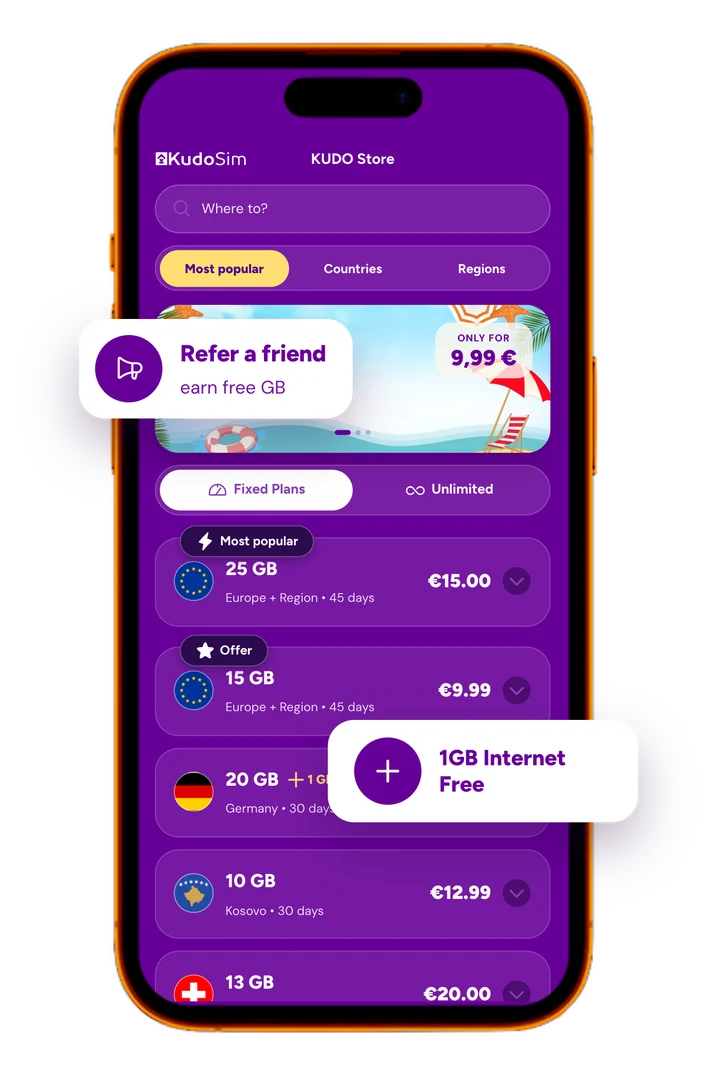
Airport SIM counters price for a captive audience. Comparisons across popular destinations regularly find airport plans costing well above what the same operators charge in city shops, and far above travel eSIM prices for the same gigabytes. An eSIM removes the whole game: you compare plans calmly at home, on Wi-Fi, with prices in plain sight. Kudo's country plans start as low as EUR 1.49, and Europe-wide coverage starts at EUR 1.20.
Time: thirty seconds versus the queue
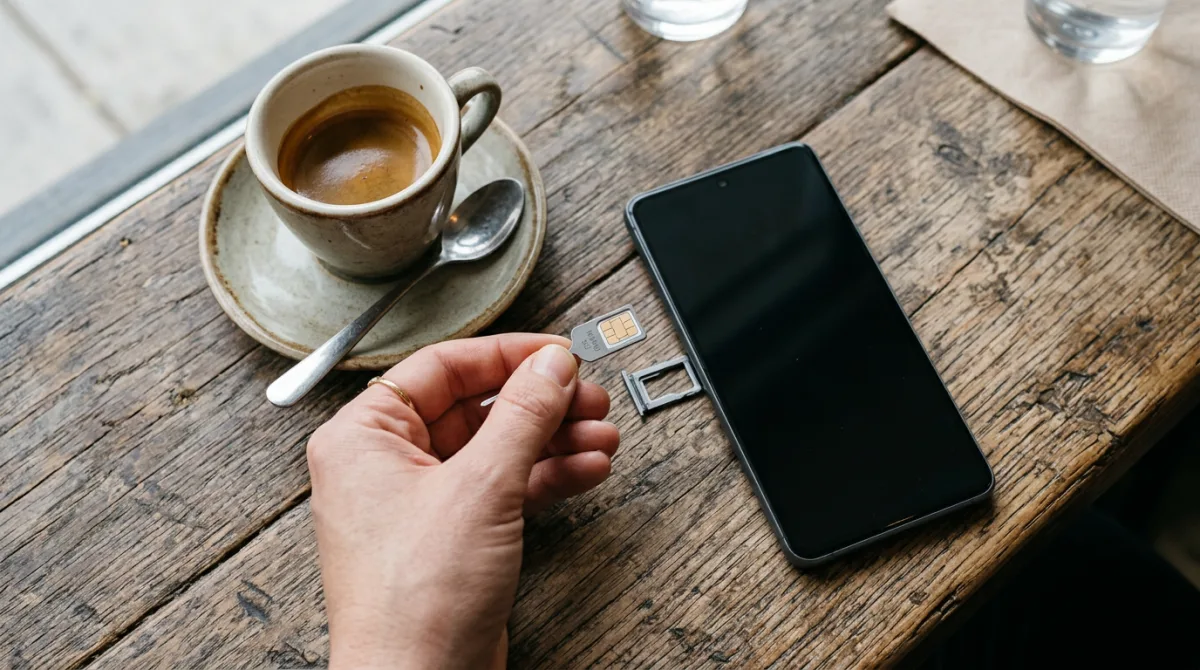
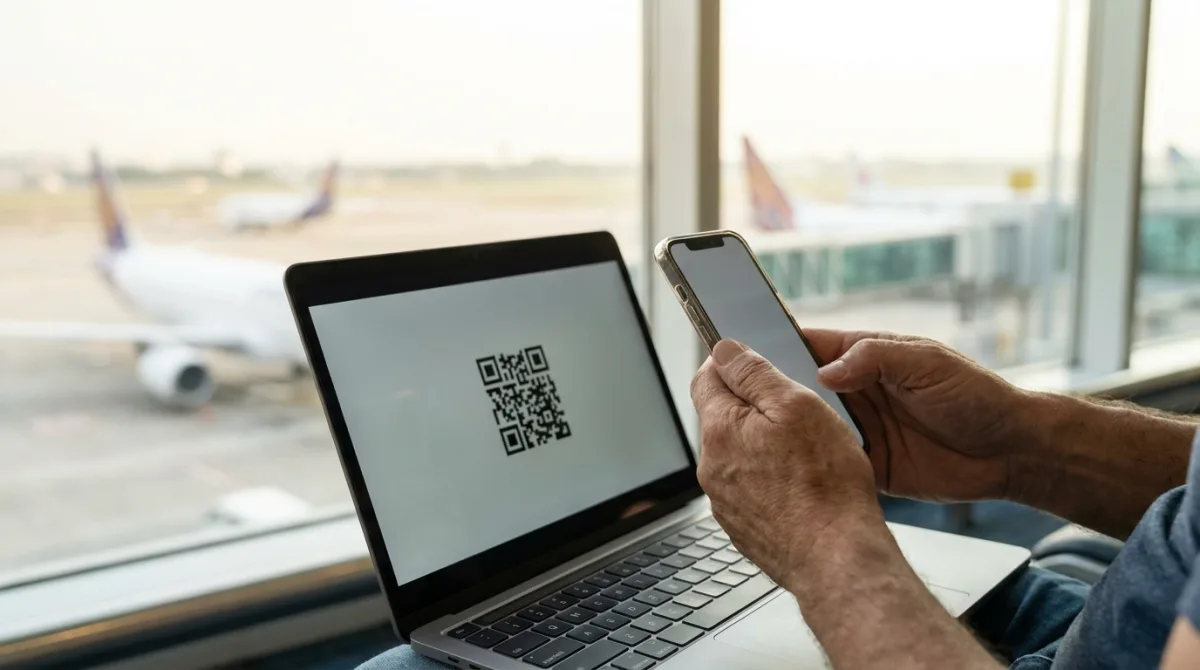
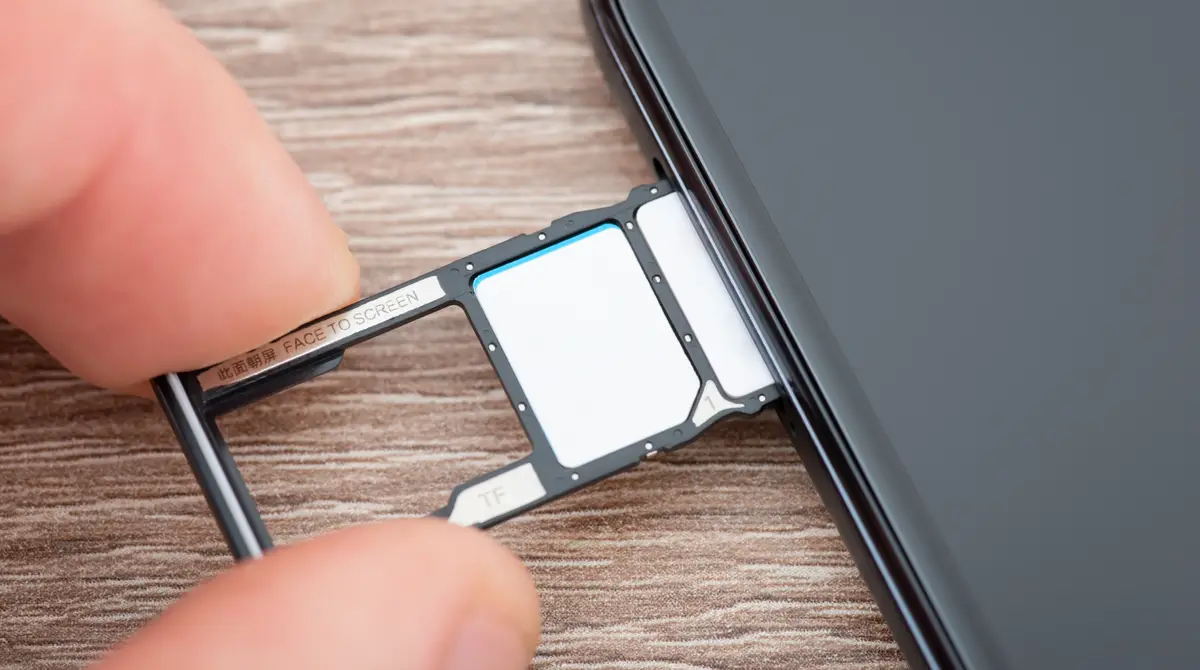
The eSIM installs at home in about half a minute: buy online, scan the QR code over Wi-Fi, done. Validity starts only when it first connects abroad, so buying a week early costs nothing. The airport kiosk means a queue after a long flight, a passport registration in many countries, a staff member fiddling with your phone, and a tiny plastic tray opened over an airport floor. One of these is a good start to a holiday.
The detail travelers learn too late: your home SIM matters
Swapping in a physical SIM means your home number goes dark: no bank verification codes, no calls from family, no WhatsApp registration checks. With an eSIM, the home SIM stays in the phone with data roaming off, receiving calls and codes for free while the eSIM carries the data. On any dual SIM phone this runs automatically, and it is the single strongest practical argument for the eSIM setup.
Where the plastic SIM still wins
- Long stays that need a local phone number: for months in one country, with local calls, deliveries and offices asking for a number, a local SIM with a contract or big prepaid bundle is the right tool.
- Phones without eSIM support: most phones from recent years support eSIM (iPhone XS and newer, most flagship and mid-range Android models), but older or imported devices may not; check the compatibility list before the trip.
- That is the whole list. For a holiday or a business trip measured in days or weeks, the eSIM case is simply stronger.
The checklist that settles it
- Trip of days or weeks? eSIM, installed at home before you fly.
- Need your home number alive for calls and bank codes? eSIM, with the home SIM staying in its slot.
- Months abroad, need a local number? Local physical SIM, bought in a city shop, never at the airport counter.
- Old phone without eSIM? Physical SIM, and still buy it in town, not at arrivals.
- Whatever you choose, decide before the flight; the kiosk prices assume you did not.
Find your destination's eSIM plan
See all destinationsHow the eSIM version of the story goes
You buy the plan for your destination a few days before flying, from 190+ countries in the catalog. The QR code arrives instantly on screen and by email, and installation over home Wi-Fi takes half a minute. On landing, the phone finds the local network by itself, your maps work at the baggage belt, and the message home is sent before the kiosk queue has moved. The plans carry generous validity, many at 60 days, so nothing races your itinerary. That is the whole trick, and it is why the kiosks are quieter every year.
Check if your phone supports eSIM
Check your phoneFrequently asked questions
Is an eSIM cheaper than buying a SIM at the airport?
Almost always. Airport kiosks price for convenience and comparisons regularly find their plans costing well above city-shop and eSIM prices for the same data. Travel eSIM plans start at a few euros, with Kudo's country plans from EUR 1.49 and Europe-wide coverage from EUR 1.20.
When is an airport or local SIM card better than an eSIM?
In two cases: long stays that need a local phone number for calls, deliveries and paperwork, and phones that do not support eSIM. Even then, buying the physical SIM in a city shop beats the airport counter on price.
Does an eSIM replace my normal SIM card?
No, it works alongside it. Your home SIM stays in the phone with data roaming switched off, keeping your number reachable for calls and bank verification codes, while the eSIM carries the mobile data. Any dual SIM phone handles both at once.
When should I buy and install a travel eSIM?
A few days before the trip, at home over Wi-Fi. Installation takes about half a minute, and validity starts only when the eSIM first connects to a network abroad, so buying early costs nothing and landing day needs no setup at all.
Which phones support eSIM?
Most phones from recent years: iPhone XS and newer, and most flagship and mid-range Android models. Older or imported devices may lack support or be locked, so check the compatibility list and make sure the phone is unlocked before buying any plan.