


China for First-Timers: The Travel Guide Nobody Gives You Before You Land
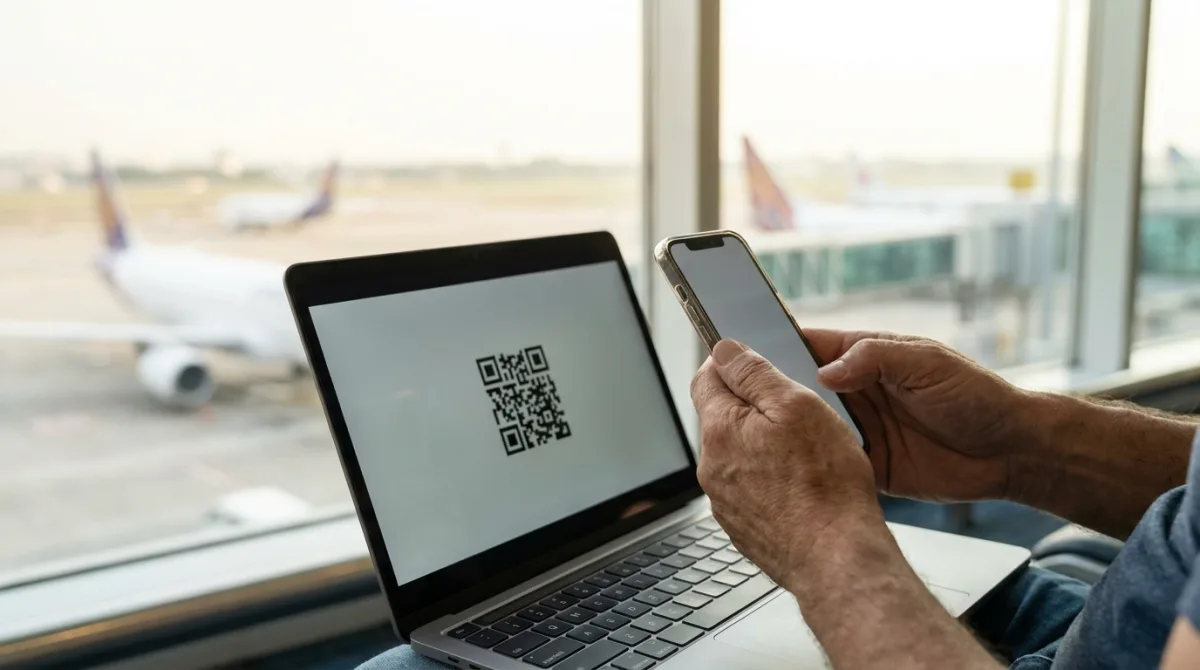
A first trip to China works smoothly if you prepare three things before takeoff: install Alipay or WeChat and link a foreign card for payments, set up a VPN and offline translation because many Western apps are blocked on local networks, and carry a travel eSIM so data works from the moment you land. With those done, high-speed trains connect Beijing, Xi'an, Chengdu, Guilin and Shanghai into a classic two-week route.

China is the trip that rewards preparation more than any other. Not because it is difficult, but because almost everything you rely on at home behaves differently: the apps, the payments, the maps, even how you buy a train ticket. Travelers who set up three things before the flight describe two of the easiest weeks of their lives; travelers who do not spend the first two days fighting their phone. This guide is the first kind, with a route, the photos to prove it, and the settings to make it all work.
Before you fly: entry rules and the apps you must install
Entry rules depend on your passport, and they have been changing fast: a growing list of European passports currently enter visa-free for short stays, while others still need a visa applied for weeks in advance. Check the rule for your own passport early, at a consulate or through your agency, and keep your passport on you every day, because hotels, train tickets and many attractions are tied to it. Then install, while still at home: a payment app (Alipay or WeChat, see below), a VPN, a translation app with the offline Chinese pack downloaded, and a maps app that works locally such as Apple Maps or Amap. None of these can be downloaded easily once you are behind the wall.

The internet in China: the part that surprises everyone
On Chinese networks and on hotel Wi-Fi, Google, WhatsApp, Instagram, Gmail and most Western services do not load. That is the Great Firewall, and it is the reason the first evening in China is so often spent staring at a spinning icon. Two things change the picture. A VPN installed before departure gets you through on any connection. And a travel eSIM that roams through an international network sends your data out through its home side, so in practice travelers find that WhatsApp, Google Maps and Instagram keep working on such plans without extra steps. Treat that as a welcome bonus rather than a guarantee: keep the VPN installed, because policies change and hotel Wi-Fi is always behind the wall.
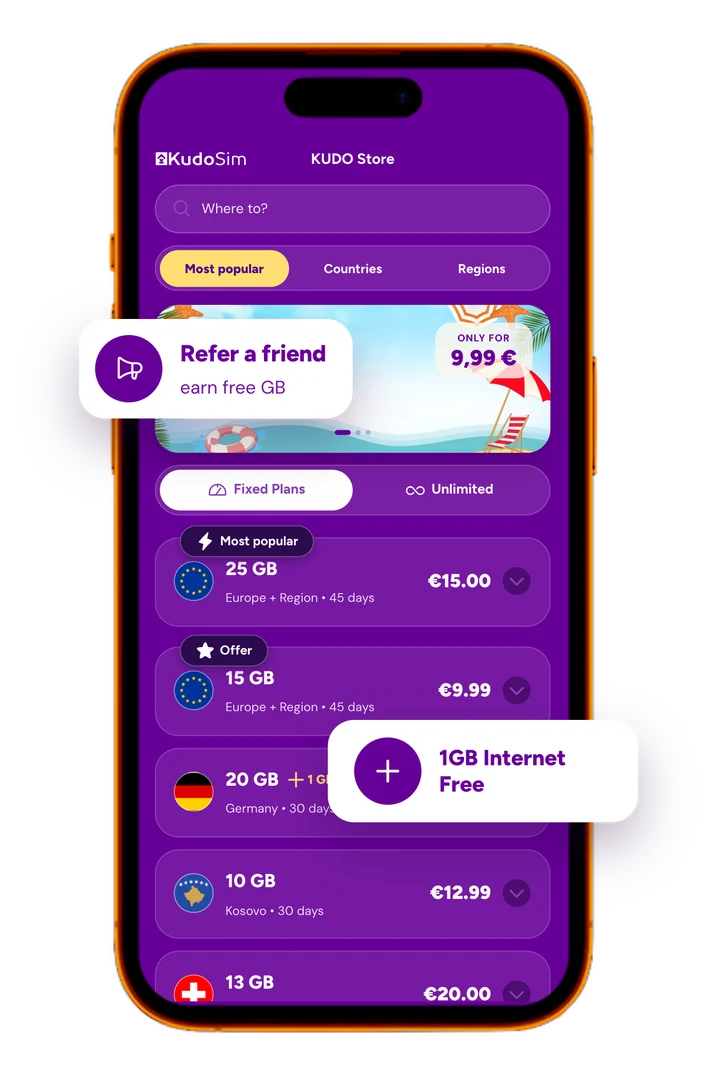
- Kudo's China plans start at EUR 8.54 for 3 GB, valid 60 days, enough for a week of maps, translation and messaging.
- The 5 GB plan costs EUR 12.81 and the 10 GB plan EUR 23, the right size for a two-week route with photo translation and daily video calls home.
- Heavy users and families sharing a hotspot take 20 GB for EUR 44, also valid 60 days.
- Install at home over Wi-Fi and activate when you land; validity starts at the first connection in China, not at purchase.
- Your home SIM stays in the phone for calls and the bank's SMS codes, with data roaming switched off.
See the China eSIM plans
See the plansPaying for things: the country where cash went out of fashion
From street food to museum tickets, China pays by QR code. The two apps that matter are Alipay and WeChat, and both now let visitors link a foreign Visa or Mastercard, so you scan the shop's code, type the amount, and pay from your own card. Set this up at home, since it needs your passport details and a working phone number for verification. Carry some cash as a backup for small markets and for the rare machine that refuses a foreign card, and do not worry about tipping, which is not customary.

Getting around: trains that make Europe look slow
China's high-speed network is the best way to see the country. Beijing to Xi'an takes about four and a half hours, Xi'an to Chengdu under four, and the trains are clean, punctual and cheaper than flying once you count the airport time. Tickets are sold against your passport through the official railway app or through international booking sites, and you board by showing the passport itself, no paper ticket needed. In cities, the metro is excellent and the ride-hailing app Didi works in English with a linked card, which saves the taxi-negotiation problem entirely.

A first route that works: Beijing, Xi'an, Chengdu, Guilin, Shanghai
Start in Beijing with the Forbidden City, the hutong alleys and a day on the Great Wall; Mutianyu and Jinshanling are the sections worth the drive, far calmer than Badaling. Take the train to Xi'an for the Terracotta Army and the old Muslim quarter's food streets. Continue to Chengdu for the pandas and the spiciest cooking in the country, then fly or train south to Guilin and Yangshuo for the karst landscape on the Li River, and end in Shanghai, where the Bund at night explains the whole modern country in one view.




If you have three more days
Zhangjiajie, the stone forest that inspired the floating mountains in Avatar, is the detour travelers talk about for years afterward. It sits between Chengdu and Guilin on the map, a long train or a short flight away, and its glass bridge and cliffside lifts are worth the extra leg if your schedule allows.

When to go, and when not to
April to May and September to October give the best weather across the whole route, with comfortable days in Beijing and clear skies in Guilin. Avoid the first week of October, the national Golden Week, when the entire country travels at once, and the weeks around Chinese New Year, when trains sell out and many businesses close. Summer works too, with heat and rain in the south, and winter is fine for Beijing if you dress for it.
Getting there: the layover plan
From most of Europe the practical routes connect through Istanbul, Doha or Dubai, with a layover that can stretch to several hours. A Turkey plan from EUR 3.79 keeps the phone alive in Istanbul, and both it and the China eSIM can sit on the phone at the same time; the phone switches to whichever network is under it. Land in Beijing with the China plan active, the payment app linked and the VPN ready, and the trip starts at the gate instead of two days later.
Turkey plans for the layover
See the plansFrequently asked questions
Do WhatsApp and Google work in China?
Not on Chinese networks or hotel Wi-Fi, where they are blocked. A VPN installed before you fly gets you through on any connection, and travelers using an international roaming eSIM generally find that WhatsApp, Google Maps and Instagram keep working on mobile data without extra steps. Install the VPN anyway as a backup.
Can I pay with my European card in China?
Directly at the terminal, rarely; through an app, yes. Link your Visa or Mastercard to Alipay or WeChat before the trip and you can pay by scanning QR codes everywhere, from street food to train stations. Keep some cash for small markets as a backup.
Do I need a visa for China?
It depends on your passport, and the rules have changed several times recently: many European passports currently enter visa-free for short stays, while others need a visa arranged weeks ahead. Check the current rule for your passport with a consulate or your travel agency well before booking.
How much mobile data do I need for two weeks in China?
Maps, translation with the camera, ride-hailing, payments and daily video calls home add up quickly; 5 to 10 GB is realistic for two weeks. Kudo's China plans offer 5 GB for EUR 12.81 and 10 GB for EUR 23, both valid 60 days, and 20 GB for EUR 44 for families sharing a hotspot.
How do I buy train tickets in China as a tourist?
Through the official railway app or an international booking site, using your passport details; popular routes sell out a few days ahead in season. You board by showing your passport at the gate, so there is no paper ticket to collect.