

Thailand for First-Timers: Two Weeks Between Bangkok and the Islands
A first trip to Thailand works best as two weeks split between Bangkok and one island group: three days for the capital's temples and street food, then either the Phuket and Krabi side of the Andaman sea or the Gulf islands around Koh Samui. November to March brings the best weather, prices on the ground stay gentle, and a Thailand eSIM from EUR 5.99 with 60-day validity keeps maps, bookings and video calls running from the airport.

Thailand is the long-haul trip that treats beginners kindly. The food is legendary and costs pocket change, the transport network actually works, the hotels give four stars for the price of two, and forty years of tourism have built an infrastructure that forgives every mistake a first-timer can make. That is why the flights from Europe fill every winter, and why the trip needs less planning than its distance suggests. Here is the version that works.
Bangkok first: three days, not one
Most visitors treat Bangkok as a layover and regret it. Give it three days: the Grand Palace and Wat Pho with the reclining Buddha at opening time, a longtail ride through the canals where the city still lives on water, the rooftop bars at sunset, and the night markets where dinner costs two euros and outclasses most restaurants back home. The BTS Skytrain and river boats beat traffic; taxis exist for the airport and late nights.

Then one island group, not four
The classic mistake is trying to see every island in one trip. Pick a side. The Andaman coast, with Phuket, Krabi and the Phi Phi islands, has the limestone cliffs and the famous longtail-boat scenery, at its best from November to April. The Gulf side, with Koh Samui, Koh Phangan and Koh Tao, offers calmer seas in other months and the best diving schools. Either side fills ten days without repeating a beach.

Street food: eat where the queue is
Thai street food is the best value meal on the planet, and the safety rule is simple: eat at stalls with a queue of locals and food cooked in front of you. Pad thai from a cart, mango sticky rice, grilled skewers, a green curry that resets your standards. Seven-day food tours exist for a reason. Carry small notes, point at what looks good, and say yes to the plastic stool.

Practical Thailand: entry, money, transport
Entry rules depend on your passport and change periodically, so check yours early; many European passports currently enter without a visa for short tourist stays, while others need one arranged ahead. Cash still matters at markets and taxis, ATMs charge a fixed fee so withdraw larger amounts less often, and domestic flights between Bangkok and the islands cost less than a dinner for two in Western Europe. Grab, the local ride app, solves the taxi negotiation completely.

Internet in Thailand: sorted before takeoff
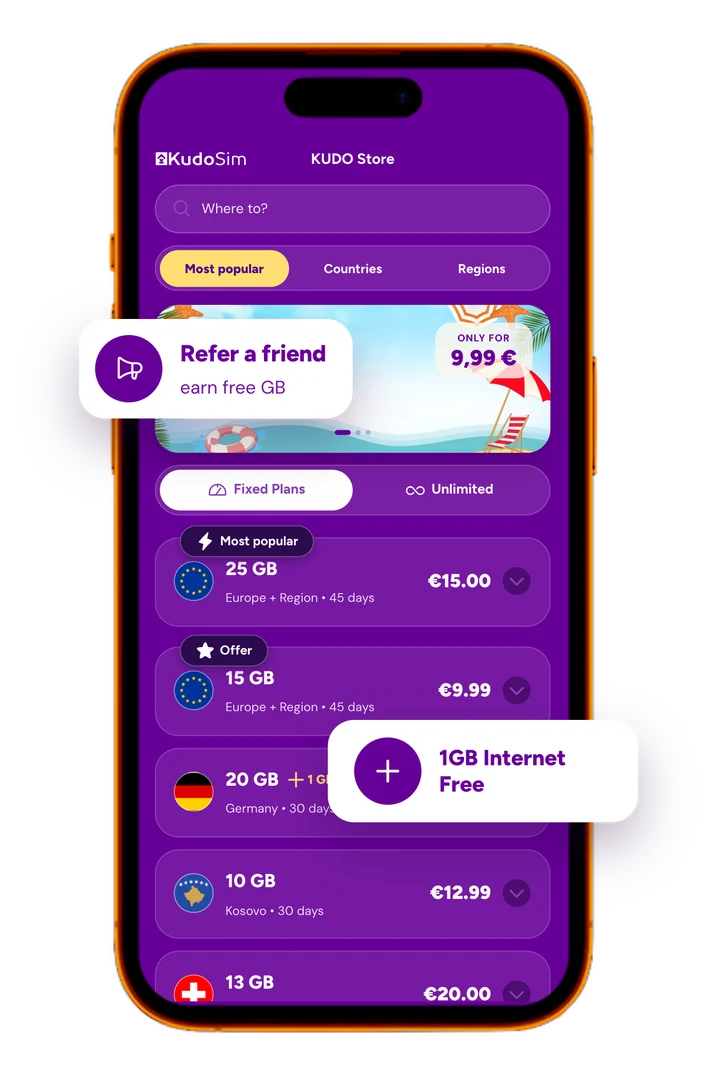
Thailand is far outside EU roaming, and the trip runs on data: Grab rides, boat tickets, hotel chats, translation, and the daily photo barrage home. Airport SIM counters work but queue badly after long-haul landings. A Thailand eSIM installed at home connects when the wheels touch:
- Thailand plans start at EUR 5.99 for 3 GB, valid 60 days, a comfortable week of maps and messaging.
- The 10 GB plan at EUR 13.99 is the two-week sweet spot, with video calls and daily uploads included.
- Heavy users take 20 GB at EUR 23 or 30 GB at EUR 29, all with the same 60-day validity, so nothing expires mid-trip.
- Fixed plans allow hotspot, so one eSIM covers the tablet on the beach too.
- Flying through Istanbul? A Turkey plan from EUR 3.79 keeps the layover online, and both eSIMs sit on the phone together.
See the Thailand eSIM plans
See the plansWhen to go
November to March is the golden window: dry, sunny and busy, with the Andaman side at its calmest. April brings serious heat and the Songkran water festival, the wet season summers stay cheap and green with afternoon downpours that pass. Whichever month you pick, the rule stays: Bangkok first, one island group, and leave a day unplanned for the place you will inevitably fall for.
Turkey plans for the layover
See the plansFrequently asked questions
How many days do you need for a first trip to Thailand?
Two weeks is the comfortable minimum: three days in Bangkok and ten on one island group, either the Phuket and Krabi side or the Gulf islands around Koh Samui. Trying to cover both coasts in one trip turns a holiday into a transfer schedule.
When is the best time to visit Thailand?
November to March offers the driest, sunniest weather, especially on the Andaman coast. April is extremely hot, and the summer wet season brings short afternoon storms with much lower prices. The Gulf islands like Koh Samui have their own rhythm, with good conditions in months when the Andaman side is wet.
Do I need a visa for Thailand?
It depends on your passport. Many European passports currently enter visa-free for short tourist stays, while other travelers need a visa arranged in advance. Rules change periodically, so check the current requirement for your passport well before booking.
Is street food in Thailand safe to eat?
Generally yes, if you follow the local rule: choose stalls with a queue of locals and food cooked fresh in front of you. Busy stalls turn ingredients over fast, which keeps them fresh. Bottled water, and fruit you peel yourself, complete the sensible basics.
How much mobile data do I need for two weeks in Thailand?
Maps, Grab rides, translation and daily video calls add up to 5 to 10 GB for two weeks. Kudo's Thailand plans offer 10 GB for EUR 13.99 with 60-day validity, and 20 GB at EUR 23 for heavy users, with hotspot included on fixed plans.